

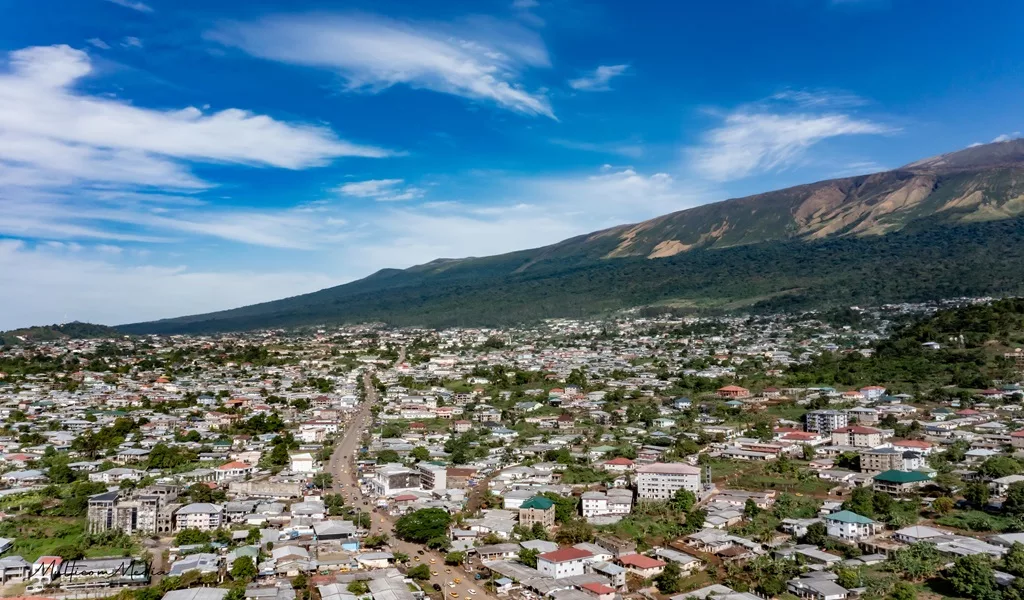
Located about 20 kilometers off the coast of the Gulf of Guinea, is an active shield volcano rising to 4,070 meters, making it the tenth highest peak in Africa and the most active volcano in Central and West Africa. It has experienced several significant eruptions since the 17th century, with notable events in 1909, 1922, and the last in 2000, sometimes causing material damage without causing casualties thanks to preventive evacuations.
Called Mongo-mo-Ndemi, meaning “mountain of the Gods” in the Bakweri language, Mount Cameroon is renowned for its stunning landscapes, biodiverse rainforests and diverse ecosystems. The forests are home to endangered species, such as forest elephants, chimpanzees and more than 330 species of birds, including two endemic ones.
The ascent of this mountain is done by various hiking trails, and the major sporting event, the “Race of Hope”, takes place every February, attracting participants for a 40 km endurance challenge with an elevation gain of 2,500 meters.
The vegetation of Mount Cameroon is rich and diverse, ranging from lowland tropical forest to sub-alpine grasslands, creating a unique gradient. This diversity contributes to the ecological importance of the site, recognized as one of the ten best places to conserve in the world by the IUCN. The cloud forests, characteristic of the mountain, are home to exceptional fauna and flora, making Mount Cameroon a natural treasure and a must-see place for nature lovers.