

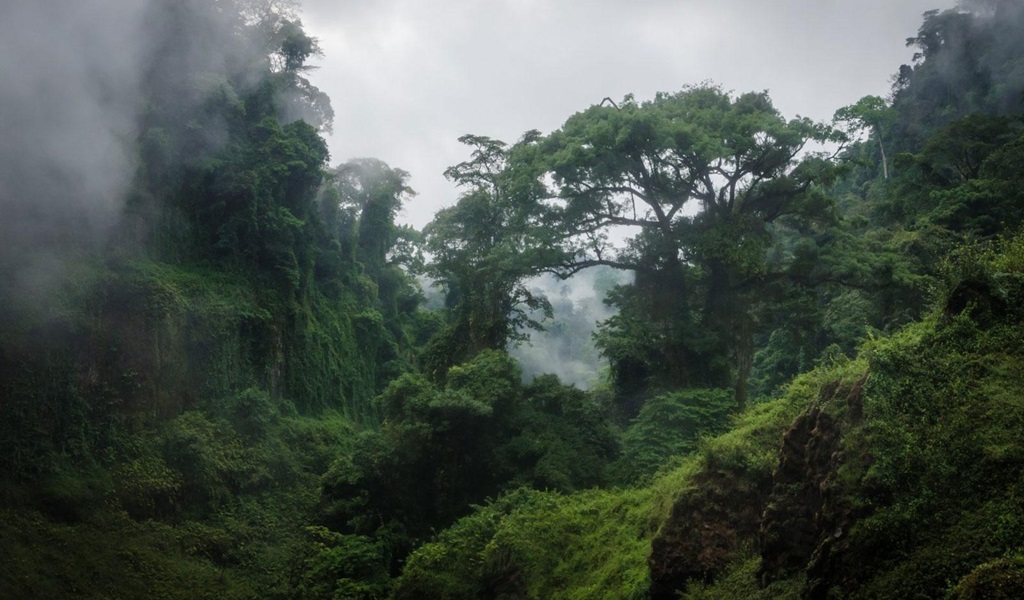
Established in 2007 in the South West region of Cameroon, covers 29,320 hectares and covers three districts (Bangem, Tombel, and Nguti) of the Kupé-Muanenguba department. It is unique in its kind, as it is located in the highland forest ecoregion and is home to exceptional biodiversity. Its highest point, Muandelengoh, reaches 1,895 meters above sea level. The park was established to protect the region’s plant diversity and watersheds, which are renowned for their ecological importance.
The park is a refuge for many species, including endangered primates such as the drill and the chimpanzee. Other animals such as the Preuss red colobus, the blue duiker, the long-tailed pangolin and the sitatunga also inhabit this vast forest. The park’s flora is distinguished by a high rate of endemism, with rare plants found nowhere else.
In addition to its ecological value, the park plays a vital economic role for local populations. The Moungo River, which runs through the park, is used for fishing, timber transport, sand extraction, and provides water to thousands of people, particularly in the city of Douala. The constant flow of the river makes it a valuable resource, despite the environmental challenges posed by population pressure.
Bakossi National Park, with its mountainous landscapes, crater lakes and exceptional wildlife, remains a critical area for biodiversity conservation in Cameroon. However, increased efforts to integrate local communities and combat illegal activities are essential to ensure its preservation.